
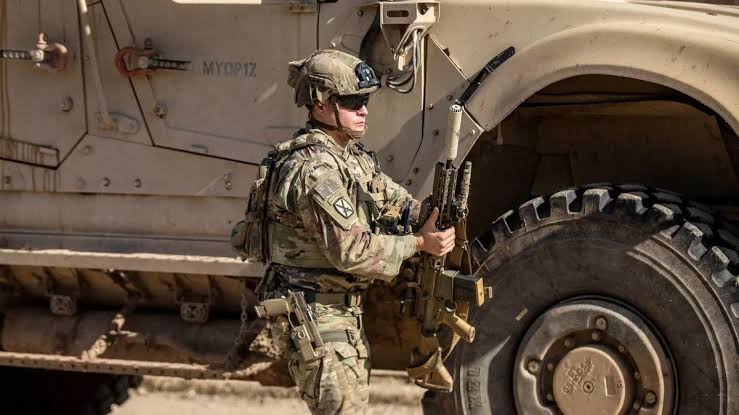
In a sobering development, the Middle East confronts a heightened crisis with the unfortunate occurrence of casualties among American military personnel, marking a distressing first since the inception of the Israel-Hamas conflict.
The attack, attributed to Iran-backed militant groups operating in Syria and Iraq, not only adds layers of complexity to the ongoing tensions in the region but also sparks a resolute response from President Biden.
In his statement, the President unequivocally vows to ensure accountability for those responsible, signaling a commitment to address the escalating situation.
This incident occurs against the backdrop of an already turbulent landscape, witnessing over 150 attacks on US forces since mid-October.
The majority of these attacks have been orchestrated by groups vehemently opposing US support for Israel, contributing to an environment of heightened hostility.
The toll from the Israel-Hamas conflict continues to rise, both in terms of human lives and the broader regional unrest it catalyzes.
As the conflict takes a toll on civilian populations, the recent attack on American military personnel further complicates an already delicate situation.
This unsettling development is not isolated, as it adds to the growing unease across the broader Middle East.
Fears of a more extensive conflict, directly involving Iran, loom large, injecting heightened uncertainty into diplomatic efforts and regional stability.
As nations navigate through the complexities of this multifaceted crisis, global attention is now keenly focused on how leaders will address the immediate aftermath and work towards de-escalation in a region fraught with historical tensions and geopolitical intricacies.