

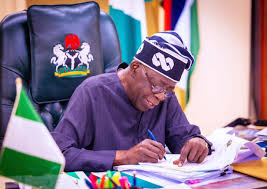
The 2024 budget reveals a significant allocation of N50bn by the Federal Government for the implementation of its student loan scheme.
The details, outlined in the budget appropriation, provide insight into the government’s commitment to kick off the program in January.
However, specifics on how the student loan scheme, introduced by President Bola Tinubu in June, will be executed remain unclear.
Despite criticism and concerns about potential tuition fees, President Tinubu reaffirmed the scheme’s commencement in January during the 29th National Economic Summit in November.
The President emphasized the student loan scheme as a sustainable model for funding tertiary education, aiming to enhance citizens’ access to higher education and eliminate strikes in the sector.
Since its introduction, the scheme has faced scrutiny, with some Nigerians expressing skepticism and the Academic Staff Union of Universities (ASUU) advocating for grants instead of loans.
The permanent secretary at the Ministry of Education initially suggested a September start for the student loan scheme, which did not materialize.
The law signed in June dictates that funds for the program will be held in the Central Bank of Nigeria and managed by an 11-person committee, chaired by the CBN governor.
This committee includes representatives from the ministries of education and finance, the Auditor-General of the Federation, the Chairman of the National Universities Commission, and other stakeholders.
Despite these arrangements, ASUU and ASUP officials express a lack of information about the scheme’s details and preference for grants.
Stakeholders, including Ayodamola Oluwatoyin from Reform Education Nigeria, emphasize the need for government transparency in the implementation process.
They call for detailed information about committees, operational procedures, and allocation specifics, highlighting the importance of openness in the successful execution of the student loan scheme.